

Custom Silicone Products Manufacturer for Industrial OEMs
MAVICSILICONE engineers and manufactures custom silicone, rubber, and LSR products according to your exact 2D/3D drawings and application requirements. From DFM and custom tooling to prototype validation and mass production, we provide complete OEM manufacturing support with rigorous quality inspection.
What Can a Custom Silicone Products Manufacturer Make?
Custom silicone manufacturers produce molded, extruded, and liquid silicone components in application-specific shapes, hardnesses, colors, and material formulations. Depending on the design, products may be manufactured through compression molding, injection molding, LSR injection molding, extrusion, or overmolding.

Molded Silicone Parts
Complex 3D geometries manufactured via compression or injection molding according to CAD specifications.
Applications: Housings, protective covers, custom industrial components.

Silicone Seals & Gaskets
Engineered sealing solutions designed to prevent fluid or gas leakage under specific compression loads.
Applications: Automotive interfaces, electronics enclosures, fluid systems.
Discuss Product
Silicone Tubing & Extrusions
Continuous profiles and tubing manufactured to precise inner and outer diameter tolerances.
Applications: Fluid transfer, medical devices, architectural seals.
Discuss Product
Silicone Keypads & Membranes
Tactile interfaces molded with specific actuation forces, conductive pills, and custom surface finishes.
Applications: Industrial controls, medical instruments, consumer electronics.
Discuss Product
LSR Silicone Components
High-precision components manufactured via Liquid Silicone Rubber injection molding for tight tolerances.
Applications: Micro-molding, optical components, high-volume repeatable parts.
Discuss Product
Silicone Overmolded Parts
Silicone directly bonded to plastic, metal, or electronic substrates to create multi-material assemblies.
Applications: Handheld devices, sealed connectors, surgical tool handles.
Discuss ProductCustom Silicone Products We Manufacture
Explore our core manufacturing capabilities for industrial applications.

Silicone & Rubber Overmolding
Custom overmolding on metal and plastic components.

Silicone Sealing Rings
Custom O-Rings, X-Rings, Y-Rings & U-Rings for reliable sealing.

Custom Colored Silicone Parts
Custom colors with Pantone color matching.

Backlit Silicone Keypads
Spray-coated & laser-etched for backlighting.

Silicone Valves
Fluid control and dispensing.

Die-Cut Silicone Pads
Precision die-cut with optional 3M adhesive.

Medical Components
Biocompatible equipment parts.

Automotive Wire Harness Seals
Reliable sealing for automotive connectors.
What Can Be Customized?
SHAPE
Custom geometry manufactured according to your 2D drawing or 3D CAD model.
MATERIAL
Solid silicone, Liquid Silicone Rubber (LSR), and application-specific compounds.
HARDNESS
Custom Shore A hardness tailored to compression, sealing, and tactile requirements.
COLOR
Custom color matching, including specific Pantone matching where applicable.
SURFACE
Matte, gloss, textured, or special surface treatments applied to the mold or product.
LOGO & MARKING
Silk screen printing, laser engraving, debossing, or embossing directly on the part.
SIZE & TOLERANCE
Custom dimensions and wall thicknesses evaluated for optimal manufacturability.
CUSTOM TOOLING
Project-specific molds developed according to geometry, parting line, and volume needs.
PACKAGING
Custom packaging, bulk packing, or specific labeling where required for delivery.
What Are Custom Silicone Products?
Custom silicone products are engineered rubber components manufactured to a customer's specific dimensions, geometry, material properties, hardness, color, and functional requirements, rather than selected from a standard catalog.
Every aspect of the product is tailored for the end application. This involves determining the optimal product geometry for demolding, selecting the appropriate solid or liquid silicone compound, defining the required Shore A hardness for sealing or tactile feel, and developing custom tooling to execute the chosen manufacturing process (compression, injection, or extrusion).
Standard Manufacturing Workflow
Silicone Materials & Comparisons
Selecting the correct compound is critical for performance. Certification availability depends on the selected material and project requirements.
Silicone vs Rubber vs LSR: Which to Choose?
Silicone is often selected for temperature stability (-50°C to +200°C typical), flexibility, weathering (UV/Ozone), and electrical insulation. Traditional rubber materials such as EPDM, NBR, and FKM may be better suited to certain oil, fuel, abrasion, or application-specific requirements. LSR is processed through specialized injection molding and is often suitable for complex, high-repeatability components.
How to Choose the Right Silicone Hardness?
Hardness is measured on the Shore A scale. The correct hardness depends on geometry, compression, sealing requirements, load, environment, and assembly conditions.
- Affects compression set and sealing force.
- Determines flexibility and tactile feel (e.g., keypads).
- Influences insertion force during assembly.
- Impacts durability and deformation under load.
Shore A Scale Reference
Silicone Manufacturing Processes
Final process selection depends on material, geometry, volume, tolerance, and project requirements.

Compression Molding
Suitable for many molded silicone components and project volumes where compression molding is appropriate. Often used for gaskets, keypads, and O-rings.
Traditional Molded Parts
Injection Molding (HTV)
Suitable for automated molding of complex silicone geometries where the process and material are appropriate, offering tighter tolerances.
Complex Geometry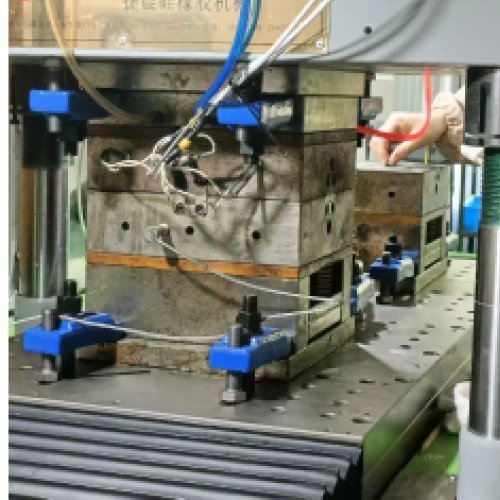
LSR Injection Molding
Liquid silicone rubber is injected into precision tooling. Commonly used for complex, highly repeatable silicone components and micro-parts.
High Repeatability
Silicone Extrusion
Continuous manufacturing of silicone profiles, tubing, cords, and custom cross-sectional shapes forced through a die.
Continuous ProfilesDFM Support for Custom Silicone Products
Before tooling, engineers should evaluate the silicone part design for manufacturability to prevent defects and reduce costs.
From Concept to Production
Drawing / CAD Review
DFM Optimization
Tooling Development
Prototype & Mass Production
Custom Tooling

Factors affecting tooling include part geometry, molding process, material, parting line, cavities, and production volume. We handle mold development from CAD to CNC and trial molding.
Prototyping

Prototype validation matters for geometry, fit, function, hardness, color, and manufacturing feasibility before investing in mass production multi-cavity tools.
Secondary & Overmolding

We support silk screen printing, laser engraving, adhesive backing, and complex silicone overmolding (Silicone + Plastic/Metal) for integrated sealing components.
Custom Silicone Products for Industrial Applications

Automotive Applications
Manufacturing seals, grommets, connector seals, protective boots, and vibration components. Material selection engineered for temperature extremes, fluids, and vibration.

Medical Equipment
Custom silicone tubing, seals, membranes, and valves focusing on material traceability, clean production, and dimensional consistency for application-specific requirements.

Electronics
Keypads, connector seals, grommets, and insulating components designed for electrical insulation, environmental sealing, and tactile requirements.

Industrial Equipment
Industrial gaskets, seals, bellows, plugs, and bushings engineered to withstand pressure, abrasion, mechanical load, and harsh service environments.
Quality Control for Custom Silicone Products
Rigorous inspection throughout production ensures dimensional accuracy and material performance. Documentation depends on material, industry, and customer requirements.
- First Article Inspection (FAI)
- Dimensional & Hardness Testing
- Visual & Flash Inspection
- PPAP-related documentation supported when required
- Material Certificates & RoHS documentation available

Custom Silicone Products Manufacturer FAQ
Technical answers to common OEM manufacturing questions.
Can you manufacture silicone products from a drawing?
What is the difference between solid silicone and LSR?
Can silicone be overmolded onto plastic or metal?
What files should I send for a quotation?
Can you sign an NDA?
Request a Custom Silicone Product Quote
Have a drawing, sample, or product concept? Send it to our engineering team. We will review the product structure, material, molding process, and tooling requirements before quotation.

Dedicated Project Manager
Ready to review your CAD files.
